


Convert Your Image to Layers You Can Edit

Upload one PNG or JPEG and click once. Text, subjects, graphics and background each come back as a separate transparent layer, named and in place.

Convert an image into editable layers

Drag images here, or click to upload

Supports PNG, JPG. Max 10MB per file

Uploaded 0 / 1 (1 more allowed)

One PNG or JPEG. You can run your first conversion without an account.

Layers

Your layers land here

Upload an image and hit convert — text, subject, graphics and background each come back as their own transparent layer.

Example

Image to layers example

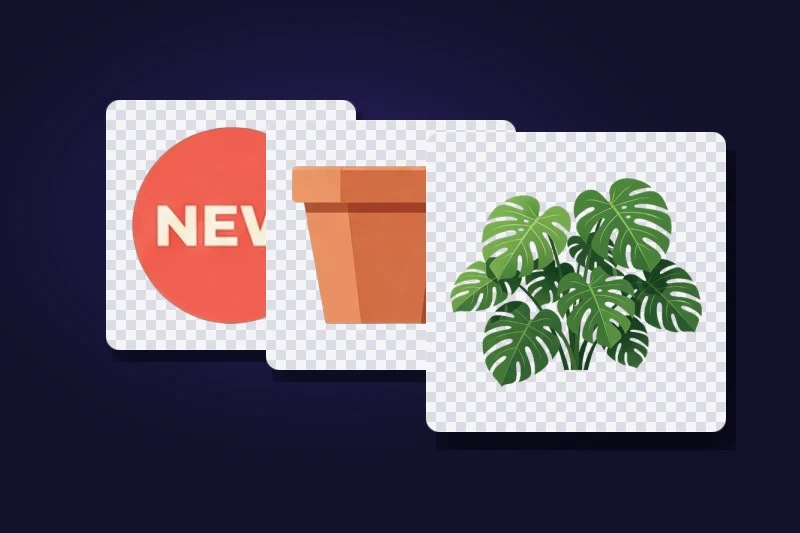
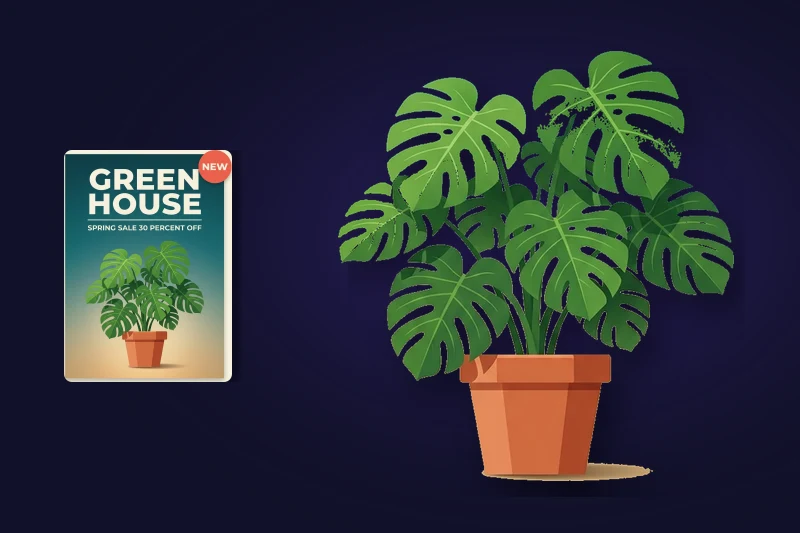
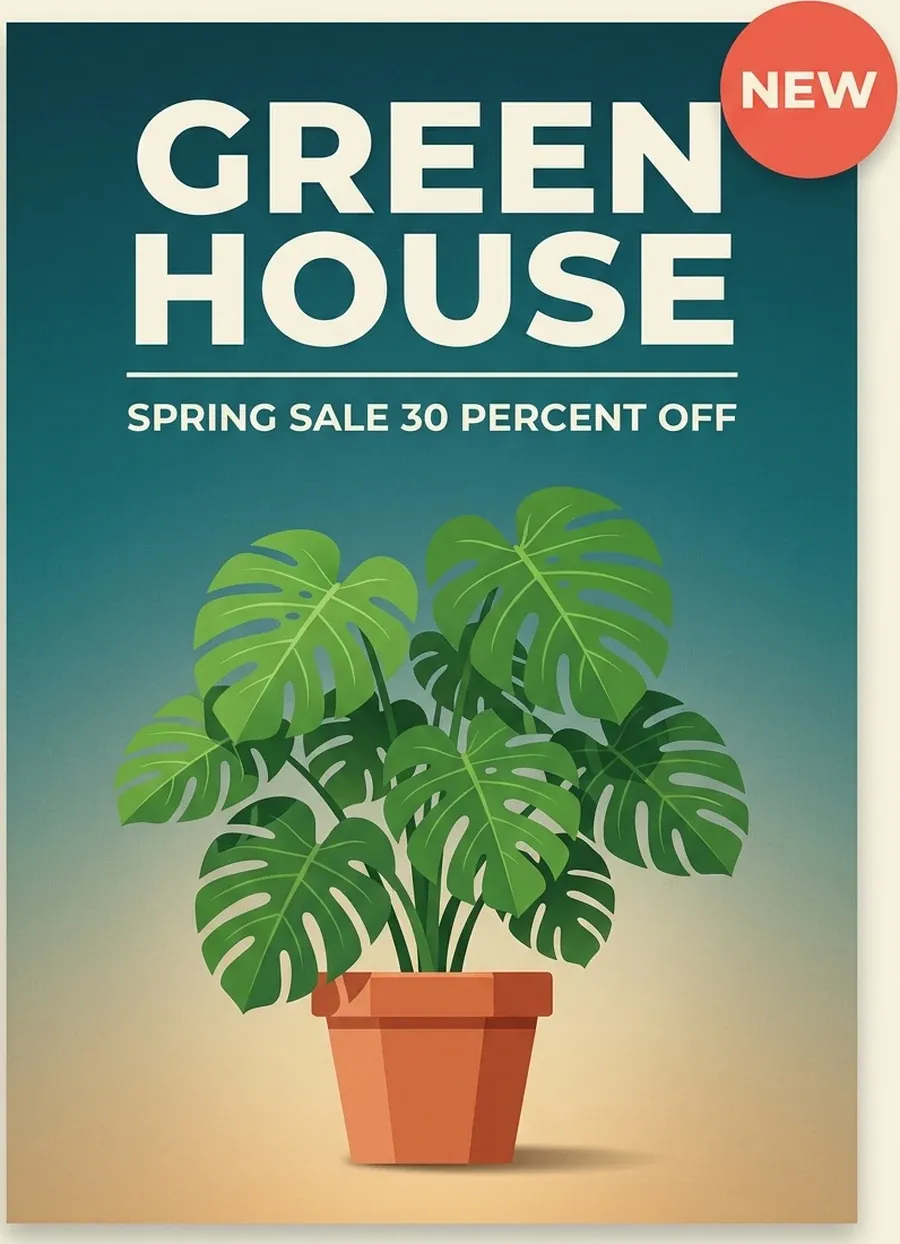
One poster in, six layers out. Every layer below is a separate transparent file, named by the model and ready to download on its own.

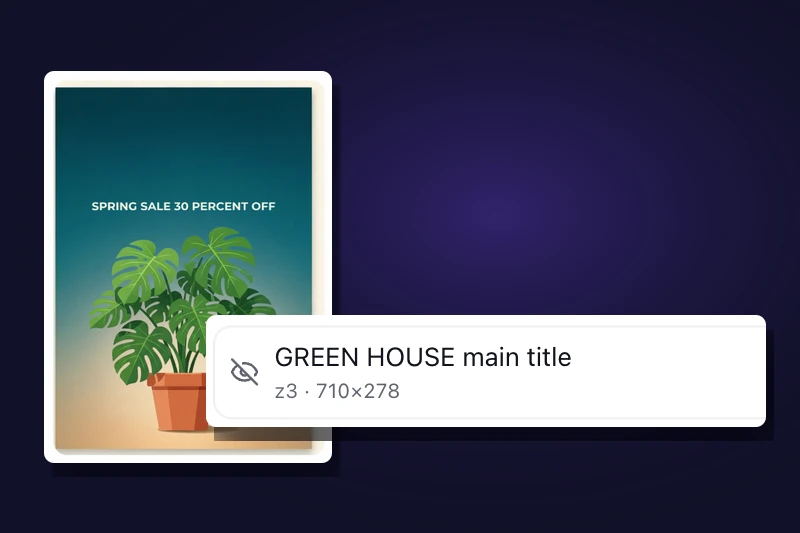
InA plant shop poster with a headline, a subtitle, a NEW badge, a monstera plant and a terracotta pot
The flat image you upload. One file, nothing separable.

Out · 6 layers

The poster background gradient on its own layer, with every element removed and the gaps filled in
Poster gradient background
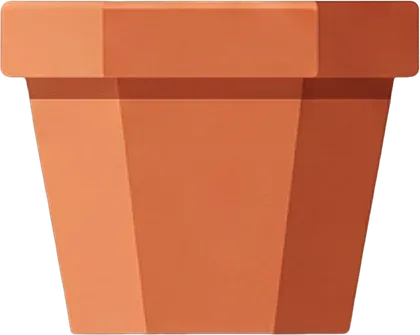
The terracotta pot cut out on its own transparent layer
Terracotta flower pot
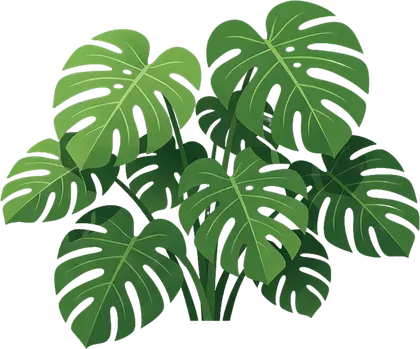
The monstera leaves cut out on their own transparent layer
Monstera plant foliage
The subtitle text on its own transparent layer
Spring sale subtitle
The GREEN HOUSE headline on its own transparent layer
GREEN HOUSE main title
The round NEW badge on its own transparent layer
NEW badge

The checkerboard is transparency. Each layer keeps its position and stacking order, so putting them back in order rebuilds the poster exactly.

Who it's for

Who uses image to layers, and when

Four situations that come up over and over. They all start the same way: a finished image, and no way to change one part of it. Every picture below is a real conversion.

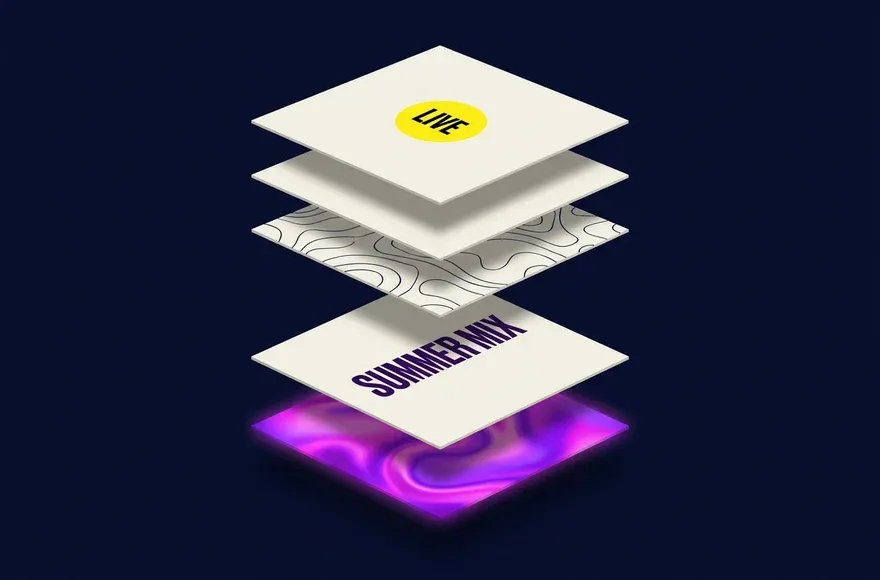
An AI-generated graphic pulled apart into a stack of layers: the gradient artwork, the SUMMER MIX headline and the LIVE badge each on their own sheet

AI images

For AI images you cannot edit

You generated something you like, but the text is wrong or an element sits in the wrong place. Regenerating changes everything else. Convert it instead, and the text comes back on its own layer.

An e-commerce banner pulled apart into a stack of layers: the background, the mug, the AUTUMN SALE headline, the SHOP NOW button and the HOT badge each on their own sheet

Marketing

For marketers reworking a signed-off graphic

The campaign visual is approved and now the offer has changed. Swap the headline, move the product, or resize for another channel without rebuilding the design.

A cafe flyer pulled apart into a stack of layers: the background, the coffee cup, the OPEN HOUSE headline, the event details and the 9AM badge each on their own sheet

Small business

For anyone without the source file

The flyer was made by someone who has moved on, and the working file went with them. Convert the exported image and change the date or the price yourself.

An app screen mockup pulled apart into a stack of layers: the background, the phone container, the progress ring, the stat cards and the button each on their own sheet

Design

For designers picking up someone else's work

A client sends a JPEG of an old design and asks for a new version of it. Getting the elements back takes a minute instead of an afternoon of masking.

Definition

What is image to layers?

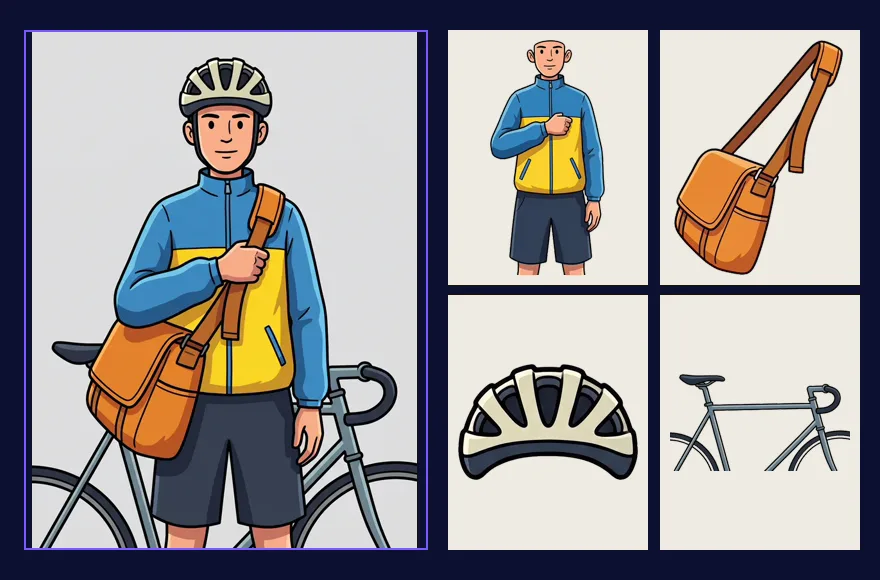
Image to layers is the process of converting one flat image into separate, editable layers. You get a rebuilt background plus each subject, text block and graphic as its own transparent PNG. IntoLayers does this automatically, names every layer, keeps its position, and exports the stack as a layered PSD.

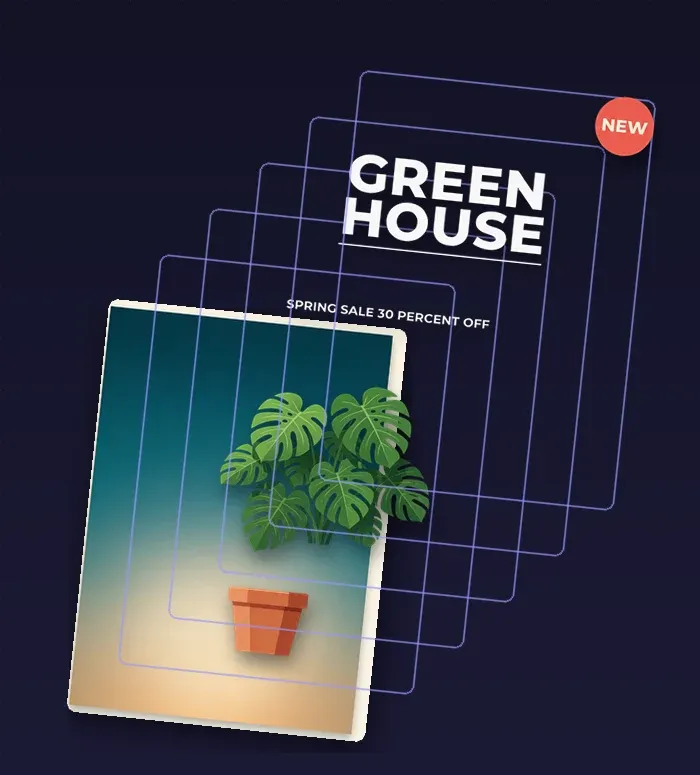
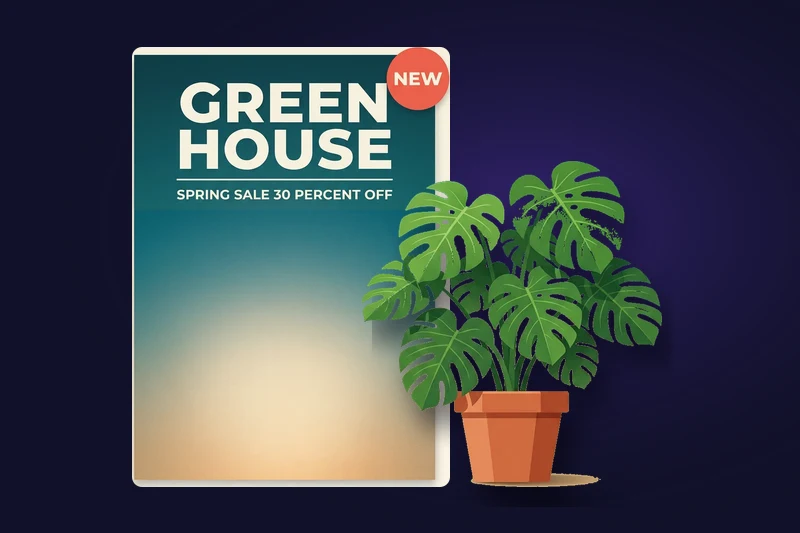
A poster converted to layers: the rebuilt background in front, with the pot, plant, subtitle, headline and badge each on their own transparent layer behind it
A real conversion. Front plate is the rebuilt background; behind it, five elements on their own layers.

What you get in the download

Base layerYour image with every separated element removed and the gaps filled in.
Element layersOne transparent PNG per subject, text block or graphic, with a readable name such as “Main headline text”.
Position and orderEach layer keeps its bounding box and stacking order, so the stack reassembles to your original.
One layered fileAll layers stacked in order as a single PSD, the format Photoshop, Photopea, Affinity Photo and GIMP all open.
Separate imagesEvery layer as its own transparent PNG in a ZIP. Layers come back at up to about twice the size they occupy, so a small enlargement stays sharp.

Every layer keeps its position and stacking order, so the PSD reassembles to your original image.

Process

How to convert an image to layers

One upload, one click, one download. No masks, no pen tool, no rebuilding.

1

Upload one image

Drop a PNG or JPEG. Posters, screenshots, social graphics, product shots and AI images all work.

2

Click Convert

The model finds the elements and separates them. Leave the layer count as it is, or raise it when you want a finer split.

3

Download layers or a PSD

Toggle each layer in the stack, download any transparent PNG, or export the whole stack as a layered PSD.

Features

What you can do with the layers

IntoLayers hands you a real layer stack, not a preview. Switch layers on and off here, then take the files into the tool you already use.

Switch any layer on and off

The preview updates as you go

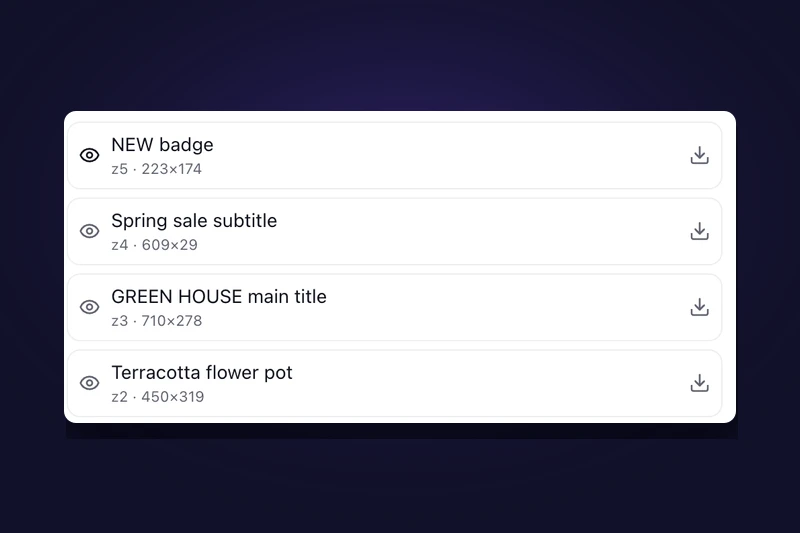
Every layer is listed with its name and stacking order. Hide one to see what sits behind it, or turn the whole design down to a single element.

Every layer arrives named and in place

Position and order preserved

Layers come back with readable names such as “NEW 2026 badge”, each one already at the right position and depth. Nothing to sort or line up by hand.

Move an element without leaving a hole

The background is rebuilt underneath

Every separated element is removed from the base layer and the gap is filled in. Slide the product across the frame and there is clean background behind it.

Take one layer, or all of them

Transparent PNG, or the whole set as a ZIP

Download a single element when that is all you need, or grab every layer at once. Each one is a transparent PNG with nothing baked into it.

One layered file for your editor

Photoshop, Photopea, Affinity Photo, GIMP

Export the whole stack as a single layered file with the layers already in order. The file is built in your browser, so your image is not sent anywhere to package it.

Layers big enough to resize

About twice the size they occupy

Each layer comes back larger than the space it fills in the original. Enlarge an element or reuse it in a bigger design and it stays sharp.

Image to layers FAQ

Answers to the questions people ask before splitting an image.

Upload the picture to IntoLayers and click Convert. In about a minute you get a rebuilt background plus every subject, text block and graphic as transparent PNGs. Download them or export the stack as a PSD.

PNG and JPEG are handled the same way: upload, pick the layer count, run the split. Every output layer is a transparent PNG. The base layer is your image with the elements removed and the gaps filled.

No. A background remover gives you one cut-out subject and throws the rest away. Image to layers gives you every element as its own layer, plus a background with the gaps filled. The whole design stays editable.

Not yet. IntoLayers separates the image and gives you the layers as files. You edit them in Photoshop, Photopea, Figma or Affinity Photo, whichever you already use.

Not automatically. Photoshop has no command that splits a flat image into object layers; you select and mask each element by hand. IntoLayers does that step for you and exports a PSD that opens in Photoshop with the layers already stacked.

No. The default works for most images, and you only pay for the layers produced. Raise the count when an element comes back merged, or switch to Auto on a paid plan to let the model decide.

PNG and JPEG, one image at a time. For PDFs, vector files or multi-page documents, export the page you need as a PNG first.

Usually about a minute for a typical design at 1K. More layers and larger output sizes take longer.

No. You can split an image at 1K without signing up. Sign in to keep your results in your library and to use the 1.5K and 2K sizes.

Yes, as long as you have the rights to the source image. The layers you export are yours to use.

Convert your first image to layers

Upload one PNG or JPEG and see the layer stack in about a minute. No account needed to try.